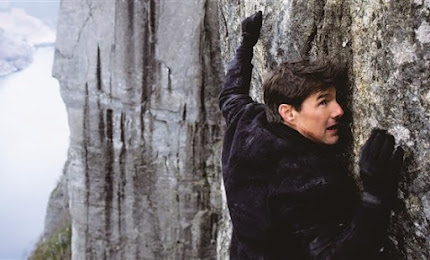
People of today are adopting healthy lifestyles, and the combination of lifestyle changes, advancements in public health, and improved healthcare is contributing to a longer life expectancy. Maintaining a healthy lifestyle is essential to minimize stress and ensure optimal performance.

Showing posts with label rock climbing. Show all posts

Wednesday, April 19, 2023

Ice Climbing

Rock climbing originated as a skill practice for difficult sections of a mountaineering ascent in the 1960s and was practiced by a small group of dedicated climbers.

Ice climbing is one of the new categories of rock climbing. Ice climbing normally refers to roped and protected climbing of features such as icefalls, frozen waterfalls, and cliffs and rock slabs covered with ice refrozen from flows of water. Equipment includes ice axes for hands and crampons for feet.

Ice climbing is one of the most physically challenging activities anybody could ever attempt. Not only do the climbers have to overcome the cold temperatures, but he also have to think about how to climb without falling. This can be a very mentally stimulating activity and will help you sharpen your skills.

Ice climbing involves certain risks. This activity takes place in natural environments, which are consequently far away from emergency services.

The two types of ice climbing—water and alpine—differ according to how the medium is created and the style in which it’s climbed. Water ice is climbed by those looking to test their technique, typically on some sort of frozen waterfall. Alpine ice is climbed in mountaineering pursuits, usually to reach a summit.

The goal of ice climbing is to submit a tall surface as fast as possible,
Ice Climbing

Thursday, July 23, 2020

Benefits of rock climbing

Rock climbing was originally used by experienced climbers to practice skills needed for scaling difficult sections of a mountain. Rock climbing and bouldering require both aerobic and anaerobic fitness, with the metabolic cost comparable to moderate to vigorous physical activity in adults.

Rock climbing can provide youth with muscular strength and endurance building exercise, and possibly improve flexibility. Climbing uses lots of muscle groups, both in the upper and lower body. The back, abdominal and leg muscles all get exercised as well as fingers, shoulders and arms. Regular climbing can improve stamina as well as muscle strength. In addition, all the reaching and stretching for holds improves flexibility and agility.

There is extensive evidence that regular moderate-to-vigorous physical activity can improve physical health by reducing risk factors for disease. It can have a positive impact on cardiovascular, musculoskeletal, metabolic, endocrine and immune systems and has been shown to be effective in the prevention of several chronic diseases such as diabetes, cancers, hypertension and osteoporosis.

Evidence shows that physical activity of any kind can help people with depression. Some scientists think that being active can help improve wellbeing because it brings about a sense of greater self-esteem, self-control and the ability to rise to a challenge.

Rock climbing is a good activity for increasing cardiorespiratory fitness and muscular endurance. In addition, the higher the height climbed the more positively influenced were grip strength, upper body muscular endurance and relative body cellular mass.
Benefits of rock climbing

Tuesday, April 10, 2018

Rock climbing

Climbing is a form of a physical activity that gains more and more followers, especially among youth but also among adults. Sport climbing is the branch of climbing in which the element of danger is reduced by pre-placing protection points in the rock or indoor wall. Because the danger element is largely removed, the physical difficulty of each climb can be high.

Rock climbing encompasses numerous different disciplines, including, but not limited to, top rope climbing, sport climbing, traditional climbing, and bouldering. Top rope climbing involves a person ascending a route with a safety rope attached from above, ensuring minimal falling when the climber releases his/her grip on the rock.

In 2014, there are over five million rock climbers in North America alone. One explanation for this growth in participation may be related to the increase of indoor rock climbing facilities, which first opened in 1964 and allowed climbers to climb all year round, despite bad weather.


The advantages of climbing as a form of recreation and sport have been appreciated in many countries worldwide. The last 30 years have seen a real explosion in the popularity of climbing.

Indoor facilities have the added benefit of removing several risk factors (e.g., falling rocks) and were found to be the safest locations to practice rock climbing. In addition, rock climbing has been shown to be an effective way of promoting physical activity in youth.
Rock climbing

Popular Posts

Other interesting articles